Lions and Tigers and Bears… oh my! by Nancy Anisfield
Lions and Tigers and Bears… oh my!
by Nancy Anisfield
And porcupines and beavers and snapping turtles…
Over the past year or so, to avoid my dogs getting into potentially dangerous situations, I’ve dealt with two otters, one coyote, three beavers and a record setting monster snapping turtle. And that was just behind my house, not even out hunting in the wilds. Life with hunting dogs goes hand in hand (hopefully not literally) with wildlife encounters that might not be friendly.
Several years ago I wrote an article on the dangers of dog and beaver encounters after hearing about two GSPs that tangled with a beaver. It bears repeating and spreading the word because few people realize that while beavers are usually shy and not aggressive, if they feel cornered or threatened on land, they can attack. Their teeth are razor sharp and their front feet have heavy claws.
The owner was in his house in Bowdoin when he heard the dogs barking wildly. He ran outside to check the commotion and found one rolling on the ground just five feet from the house, struggling with a large beaver. The other stood by watching. With no shoes on to make kicking an option, the owner grabbed the dog’s foot and pulled him off. That dog’s injuries weren’t severe. The beaver continued to click is teeth and show no fear. The other shorthair’s legs were covered in blood from a severed artery in his neck. With a dish towel serving as an intermittent tourniquet, the owner raced to the vet. Fortunately they saved the dog.
When I heard about this incident, I asked a wildlife biologist from the Vermont Department of Fish and Wildlife if it was unusual for a beaver to behave that aggressively. She said yes, “But you can’t ever say ‘never’. Normally beavers won’t go more than 100 yards from water, and when they move to a new territory, they tend to follow a water course.” Two-year-old beavers, however, leave their family groups to find their own territory and a mate, often traveling by land or water for miles. That makes them the most likely ones hunters and dogs might run into away from a large water source.
When frightened, a beaver will hiss or make blowing sounds – a warning that could precede an attack. Beavers will also slap their broad, flat tails on the surface of the water as a warning to predators or other beavers. On land, facing an perceived threat, beavers will rear up on their hind legs while hissing or growling, then lunge forward to bite.
What’s the hunter with hunting dogs to do? Be aware and be cautious when hunting near water known to be beaver territory. Keep the dogs in close and be able to whoa the dog that shows interest in a beaver. Similar to the precautions taken against other potentially dangerous encounters – bears, alligators, snakes – recognizing their habitat and the risk to our dogs is half the battle.
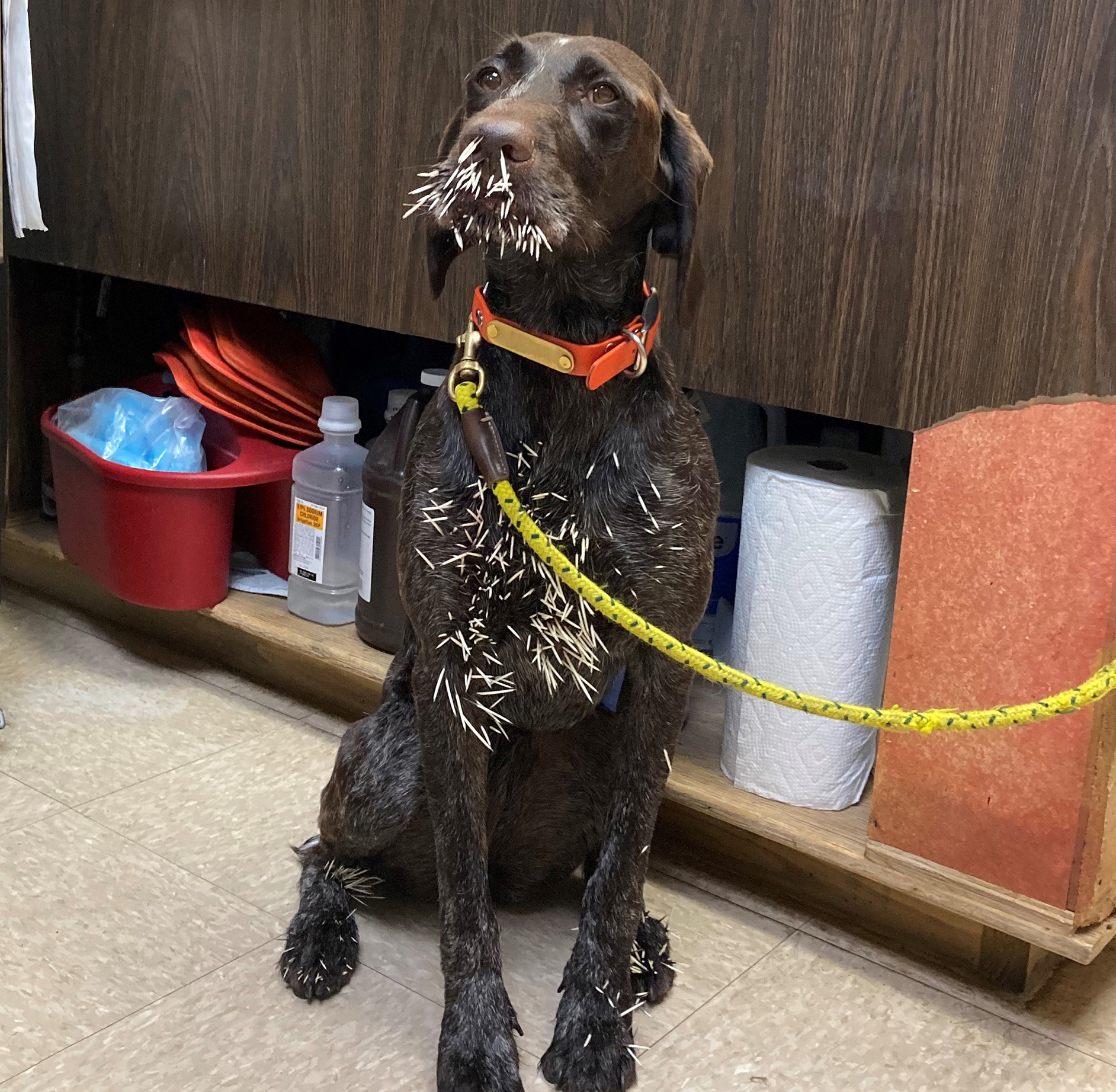
And then there are porcupines. Most hardcore grouse hunters have had a porcupine encounter at some point, either while hunting or training. Some dogs learn after the first time getting a snout full of quills; other dogs are repeat offenders when it comes to jumping on a porcupine. River, seen in this photo after doing a full body slam on one, backed away on her next encounter a year later. Prairie, who was nearby, glanced at River then dove in with a leap, dock dog style. She already had three porcupine events on her resume.
Dealing with quills has a lot of variables to take into consideration. A few quills, no big problem. Lots of quills and vet nearby makes light sedation the best option for easier and more thorough removal. It’s also less stressful for dog and owner. Being out in the middle of nowhere, however, means you have to do the job yourself. The consensus is that hemostats are best for gripping (keep a pair in your bird vest), better than pliers or tweezers. Put a stick or dowel in the dog’s mouth to keep it open enough to feel for quills in the jowls or gums and also to prevent quills from breaking off if the dog tries to lock its jaws.
Pull quills straight out slow and steady. Have some gauze or clean cloth nearby to wipe drool and blood. Do the outside quills first, then feel gently around inside the mouth. Some quills may break off under the skin. These will most likely work their way out over the next few days. Watch and feel for them, and remove them using the hemostat again. Quills that don’t migrate outward might need removal – by a vet – with a tiny incision. Needless to say, a dog with a lot of quills in its tongue or throat should be taken to a vet.
Quills that break off and can’t be removed may migrate and cause problems. The percentage of time this happens is low, but it is possible. After one encounter, the aforementioned Prairie ended up with an abscess in her lower lip from a tiny piece that settled there. After another episode, she developed an infection in her wrist. Dogs that chomp a porcupine usually swipe at the quills which then break off and stick in their forelegs or paws. If they can’t be removed they could cause joint or ligament problems. Many vets recommend antibiotics after a quill encounter to prevent infection.
What to do about porcupines? Porky proofing, like snake proofing, is an option that might reduce the risk. But dogs will be dogs, and hunting dogs will be hunting dogs twice over. Some dogs will point porcupines, some will display scenting behavior different from bird encounters. With no sure fire ways to avoid the possibility of a porcupine encounter, be prepared to deal with quills and always expect the unexpected.